
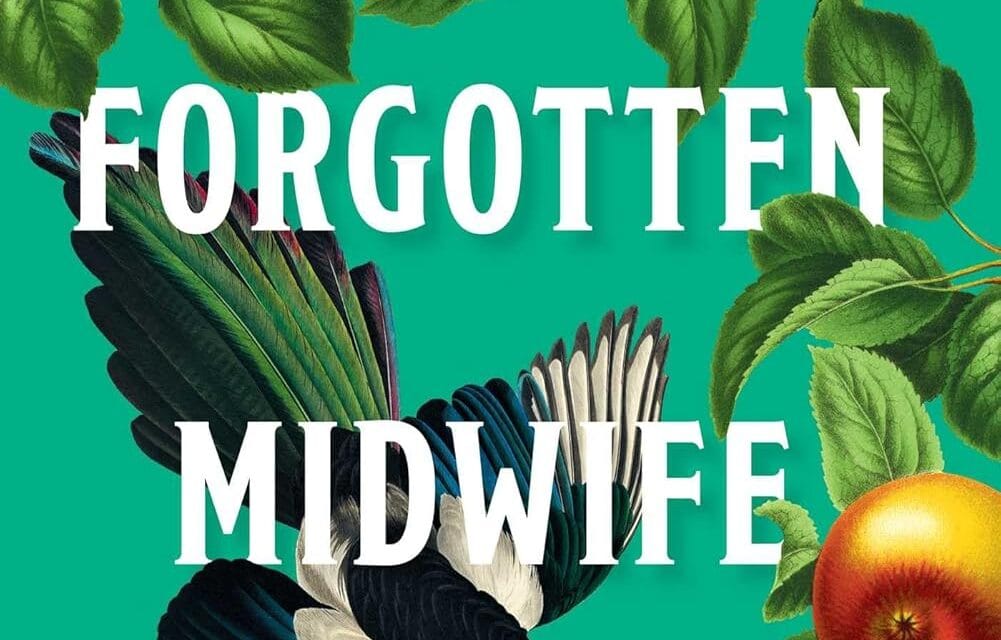
A History of Forgotten Women in Mid-Century Ireland
 The Forgotten Midwife
Multigenerational Fiction, Mothers & Children Fiction, Women's Domestic Life Fiction
Gallery Books
May 12, 2026
Ebook, Audiobook, Hardcover
368

New Jersey, 2023. Riley Carmichael is getting married and finally joining a huge, loving family, but she can’t help but feel the emptiness of her own side of the church. For most of Riley’s life, it’s been just her and her grandmother, Betty, but as late-stage dementia overtakes her grandmother’s mind, Riley knows she’s losing her, too. On one of Riley’s visits to Betty’s nursing home, she encounters her grandmother in one of her increasingly rare moments of lucidity, and Betty desperately shares with Riley a tatty birth certificate for an unknown baby born in Ireland in the 1950s. Full of questions about her heritage, Riley embarks on a trip to Ireland to find that elusive sense of home, identity, and belonging.
Tipperary, Ireland, 1954. Margaret Lannigan’s life is made up of weekly dances and time spent with the love of her life, Joseph. But when Margaret’s older sister dies suddenly, it falls to Margaret to fulfill the family’s commitment to the Catholic Church: the eldest daughter of the Lannigan family has joined a local convent for generations. Forced to part with Joseph and take the veil, Margaret is sent to Ballyvale Home for Fallen Girls to care for expectant mothers who fell pregnant outside of marriage. With no training or midwifery skills, she must fight to provide the compassionate care she feels these women deserve amid the cruelty they face.
When Margaret meets a young and terrified Delia O’Rourke, the sister of her childhood best friend, she must find the strength she needs to protect this young woman and her baby in the face of a system built to ensure they disappear.
Told with courage and heart, The Forgotten Midwife is a haunting, hopeful novel about the strength of women, the meaning of family, and the life-saving power of friendship.
Based on the real lives of Ireland’s “fallen” girls of the mid-20th century
The Forgotten Midwife by Laura Anthony is a great work of historical fiction rooted in the real, tragic history of Ireland’s mid-20th-century “mother and baby” homes. These institutions housed young women—often almost children themselves—who were sent away, silenced, and largely forgotten. This novel is truly eye-opening, shedding light on a dark chapter of history that feels shockingly recent.
Told through dual timelines, the story follows Riley, a modern-day woman in New Jersey, and Margaret Lannigan, a young woman in 1950s Ireland. Riley’s journey begins when her grandmother—succumbing to dementia—hands her a mysterious box containing a birth certificate and a pair of hand-knitted baby booties. The discovery raises unsettling questions: Who is the baby named on the certificate? Was Riley’s deceased mother actually adopted?

As Riley searches for answers, the narrative shifts to Ireland in 1954 and into Margaret’s life. On the brink of a joyful engagement to the man she loves, tragedy derails her future and forces her into a convent. She eventually takes on midwife duties in a home for “fallen girls,” where she witnesses firsthand the harsh realities unmarried pregnant women endure. The women work grueling hours in laundries as punishment for their “sins,” while the system strips them of dignity, autonomy, and even their children.
The Forgotten Midwife grips the reader in many ways. I found it almost unbelievable how much cruelty these young women endured. Even more disturbing, their families often chose to hide them away, treating them like a “problem” to erase. Meanwhile, men face no accountability and even gain more power—women cannot leave the home unless a male family member over 18 grants approval. My jaw dropped more than once while reading.
Still, the women in this story show remarkable resilience and courage. The imagery of young motherhood feels especially tender.
That said, while the historical subject matter carries real weight, the narrative sometimes lacks the emotional depth I wanted. Some of the most shocking events move too quickly and with little detail. The dual timeline structure, though important in concept, feels underdeveloped in execution. Riley’s storyline opens the book with promise but gradually fades, making her far less memorable than Margaret.
Overall, The Forgotten Midwife is a fascinating historical fiction novel that brings attention to a forgotten injustice. Despite a few areas that I wished were more developed, it remains a worthwhile, thought-provoking read—especially for those drawn to stories of resilience, hidden histories, and women’s untold experiences.

Celeste is a woman who is unwavering about certain things in life; three of those being books, cats, and cold brew coffee. If she can enjoy all three at the same time, it’s going to be a good day. Her favorite genres are fantasy or sci-fi romance, historical romance, and historical fiction but every few books she likes to mix it up with contemporary fiction, a good psychological thriller, or an inspiring memoir. She has a busy schedule working full-time for an online university but she makes sure to unwind each day with stories, either by reading to her elementary school-aged daughter or tucking herself in bed with her Kindle or the latest book she picked up at a local book store.


