
A Cinderella Villian Story
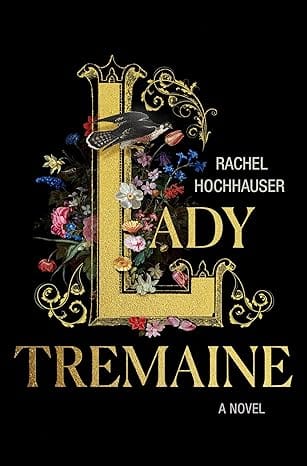 Lady Tremaine: A Novel
Mythology & Folk Tales, Folklore, Mother and Children Fiction
St. Martin's Press
March 3, 2026
Ebook, Audiobook, Hardcover
341

Twice-widowed, Lady Etheldreda Verity Isolde Tremaine Bramley is solely responsible for her two children, a priggish stepdaughter, a razor-taloned peregrine falcon, and a crumbling manor. Fierce and determined, Ethel clings to the respectability her deceased husband’s title affords her, hoping it will secure her daughters’ future through marriage.
When a royal ball offers the chance to change everything, Ethel risks her pride in pursuit of an invitation for all three of her daughters—only to see her hopes fulfilled by the wrong one. As an engagement to the future king unfolds, Ethel discovers a sordid secret hidden in the depths of the royal family, forcing her to choose between the security she craves and the wellbeing of the stepdaughter who has rebuffed her at every turn.
As if Bridgerton met Circe, and exhilarating to its core, Lady Tremaine reimagines the myth of the evil stepmother at the heart of the world’s most famous fairy tale. It is a battle cry for a mother’s love for her daughters, and a celebration of women everywhere who make their own fortunes.
Rachel Hochhauser’s debut novel, Lady Tremaine, feels both nostalgic and strikingly immediate. It echoes the Cinderella fairy tale I grew up with, scattering familiar elements like breadcrumbs throughout the narrative. That familiarity lends the story a sense of childhood innocence—but Lady Tremaine is anything but innocent.
Hochhauser reimagines Lady Tremaine—known here as Ethel—as a woman raised without a mother. Surrounded by rowdy brothers and a tradesman father, Ethel learns how to be a lady from a hired governess. She masters those lessons, but it is her wild heart and love of freedom that led her to happiness in her first marriage. That happiness is short-lived. Ethel’s husband dies after the birth of her daughters. To secure them a future, she marries Lord Bramley (Cinderella’s — or in this story, Elin’s — father). When Lord Bramley then dies, he leaves behind a ruined estate and a difficult stepdaughter, forcing Ethel to navigate survival against terrible odds.
At its core, Lady Tremaine is a story about motherhood and womanhood in a rigid, unforgiving social order. Women who follow the rules may earn approval—or at least safety. Those who stray risk destitution, exile, violence, or starvation. For a mother, especially one raising daughters of marrying age, survival requires cunning, sacrifice, and, at times, ruthlessness.
“A mother, in the bone of her bones, was not in balance. She gave, without ending. She thought not as an I but as a we and more often it was you, you, you, my darling, you. A mother protects, tipping scales, weighing odds, defying the system.”
Elin is a fascinating character. Imagine Cinderella as prudish and spoiled—pale and delicate next to the robust, passionate Lady Tremaine. Elin clings to moral lessons that feel shallow and one-dimensional in a world defined by moral gray areas. I will always remember Cinderella portrayed as a selfish prig.
Though Lady Tremaine is undeniably dark, it closes with a faint but meaningful glimmer of hope for Lady Tremaine and her family. Ethel is a heroine I understood on a deeply human level. Hochhauser doesn’t write a villain; she writes a woman pushed to the brink by a society that offers her no good choices.
This is a compelling read and an impressive debut novel. Hochhauser’s prose is lyrical yet accessible, balancing emotional depth with narrative clarity. Lady Tremaine is a feminist fairy-tale retelling that deserves a wide readership—and an author whose work should not be missed.

Celeste is a woman who is unwavering about certain things in life; three of those being books, cats, and cold brew coffee. If she can enjoy all three at the same time, it’s going to be a good day. Her favorite genres are fantasy or sci-fi romance, historical romance, and historical fiction but every few books she likes to mix it up with contemporary fiction, a good psychological thriller, or an inspiring memoir. She has a busy schedule working full-time for an online university but she makes sure to unwind each day with stories, either by reading to her elementary school-aged daughter or tucking herself in bed with her Kindle or the latest book she picked up at a local book store.


